
Africa's Energy Financing Gap: Can a New $5 Billion Bank Change the Equation?
Africa has taken an important step towards building its own energy financing architecture with the formal establishment of the Africa Energy Bank (AEB), a joint initiative of the African Export-Import Bank (Afreximbank) and the African Petroleum Producers' Organization (APPO).
By Development Finance·
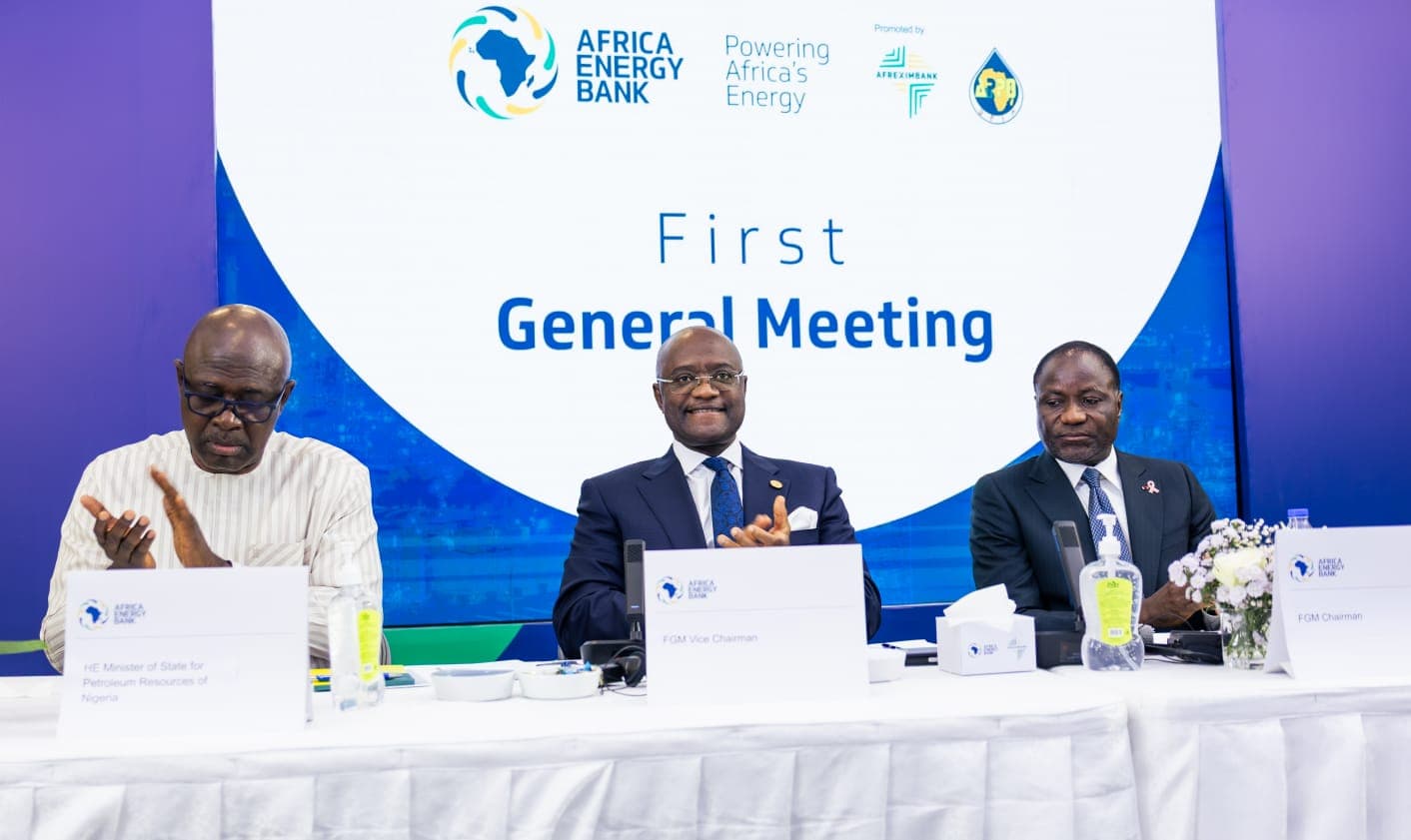
Africa has taken an important step towards building its own energy financing architecture with the formal establishment of the Africa Energy Bank (AEB), a joint initiative of the African Export-Import Bank (Afreximbank) and the African Petroleum Producers' Organization (APPO).
Announced in Abuja, Nigeria, on 31 October 2026, the institution enters a market where African countries face enormous financing requirements, limited access to affordable long-term capital and growing difficulties attracting international financing for oil and gas projects.
The bank has an authorized capital of $5 billion and is intended to support investment across the energy value chain, including exploration, production, transportation, processing, refining and distribution.
But the headline figure requires perspective. Africa's energy investment requirements are estimated at approximately $200 billion. The proposed bank therefore represents an important institutional intervention, but it cannot independently finance the continent's energy ambitions.
One of the most important distinctions surrounding the bank is the difference between authorized capital and money actually available for lending.
The $5 billion represents the bank's authorized capital, not cash already deposited or immediately available for investment.
Before its formal establishment, APPO Secretary-General Farid Ghezali told S&P Global Energy that the institution had mobilized approximately $500 million in initial capital, including contributions from APPO members and Afreximbank.
Afreximbank's reported contribution was $222 million, while Nigeria contributed $200 million. The remaining $78 million has not been fully reconciled through a consolidated public capital statement.
Ghezali also outlined ambitions to raise $5 billion through the market and ultimately reach $10 billion by the end of 2027.
These are fundraising ambitions, not confirmed capital commitments.
The distinction matters because a development bank's lending capacity depends on its actual paid-in capital, ability to borrow, shareholder support and capacity to attract additional investors.
Africa occupies an unusual position in the global energy economy.
The continent possesses significant oil and gas resources, yet many African countries remain dependent on imported refined petroleum products and lack adequate energy infrastructure.
International financing has also become more selective, particularly for fossil-fuel projects, as financial institutions respond to climate policies, environmental commitments and changing investment priorities.
This creates a financing challenge for countries seeking to develop domestic resources while expanding electricity generation and industrial capacity.
The Africa Energy Bank is intended to provide an alternative financing channel, particularly for projects that struggle to secure conventional funding.
Its initial focus is expected to include cross-border pipelines, regional refineries and oil and gas infrastructure.
APPO's secretary-general has indicated that the institution hopes to finance at least three projects in 2027.
That would be an important early test of its ability to move from institutional establishment to actual project financing.
Perhaps the strongest economic argument for the bank lies beyond crude oil production.
Africa has historically exported substantial quantities of raw commodities while importing finished and processed products at considerable cost.
Developing regional refining, processing, transportation and storage infrastructure could help retain more economic value within African economies.
For example, regional petroleum infrastructure could improve supply security, reduce transportation costs and strengthen trade between African countries.
The opportunity also extends to industrialisation. Reliable and affordable energy is essential for manufacturing, mining, agriculture and the development of new industries.
However, infrastructure investment must be commercially justified. A refinery or pipeline does not automatically generate economic value simply because it is built. Its viability depends on demand, operating costs, financing terms and regional market integration.
The bank also enters a complicated global environment.
While Africa argues that its development requirements justify continued investment in oil and gas, international capital markets are increasingly assessing energy projects against climate commitments and long-term transition risks.
This presents a potential challenge for the institution.
Investments in fossil-fuel infrastructure may generate attractive returns today but face changing demand patterns, regulatory restrictions and technological competition over their operating lives.
The bank's long-term sustainability will therefore depend on how it balances immediate energy security requirements with the continent's evolving electricity and clean-energy needs.
Its founders have described the institution as supporting a just energy transition. However, its initial financing priorities are expected to be concentrated in oil and gas. That balance will deserve close scrutiny.
Africa's Energy Bank represents an attempt to address a longstanding structural weakness in the continent's development model: dependence on external capital to finance critical energy infrastructure.
Its establishment is a milestone, but the harder work begins now.
With an initial reported capital base of approximately $500 million against an estimated $200 billion in continental energy investment requirements, the institution will need to mobilise substantial additional resources and attract credible investment partners.
Its first financing decisions in 2027 will provide an important indication of its direction.
Africa does not simply need another development bank. It needs a financial institution capable of turning its natural resources into productive capacity, industrial investment and sustainable economic returns.