
Kenya Awards $Billion-Dollar Mrima Hill Minerals Project to U.S.-Backed Consortium
Kenya has selected a U.S.-backed consortium led by ReElement Technologies to develop the strategically important Mrima Hill critical minerals deposit, placing the country at the center of growing competition between Washington and Beijing over access to minerals essential to advanced manufacturing and defense.
By Editor·
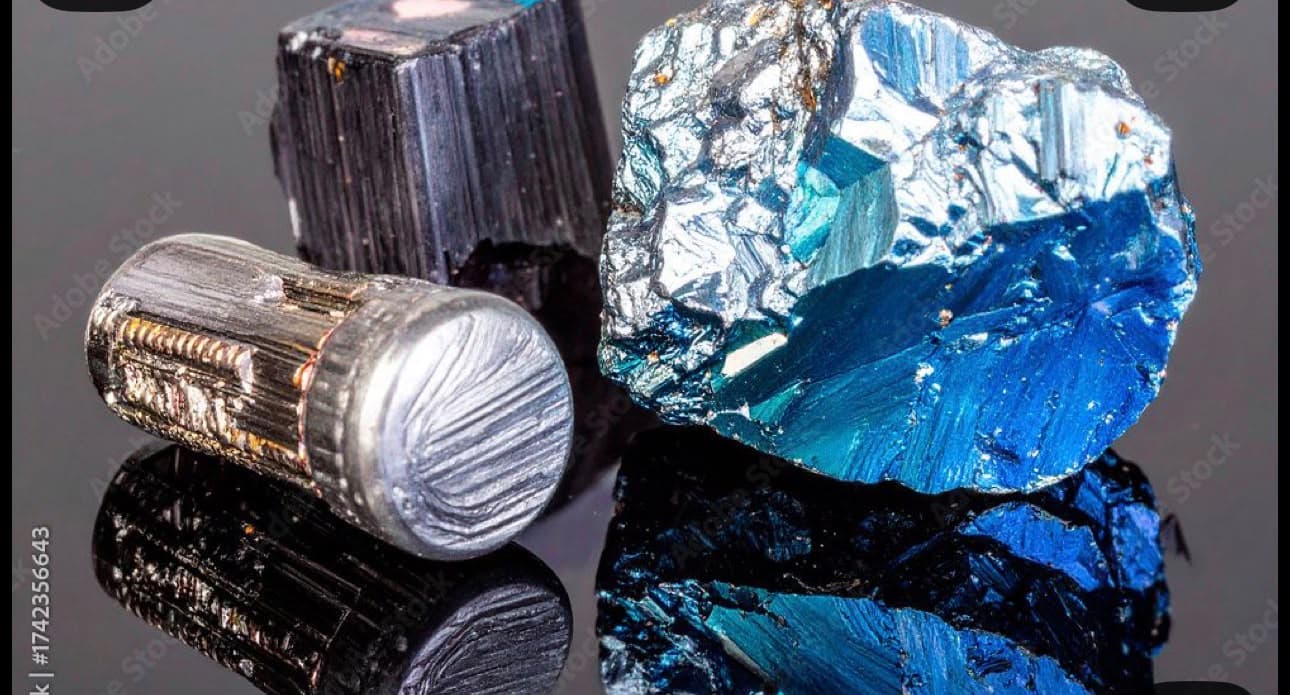
Kenya has selected a U.S.-backed consortium led by ReElement Technologies to develop the strategically important Mrima Hill critical minerals deposit, placing the country at the centre of growing competition between Washington and Beijing over access to minerals essential to advanced manufacturing and defence.
The winning consortium, Frontier Minerals, comprises Indiana-based ReElement Technologies and American Resources Corporation, alongside U.S.-based miner Bunker Hill. It defeated rival bidders backed by American and Australian interests following a competitive tender process.
Kenya's Ministry of Mining said preliminary assessments indicate that Mrima Hill, located in Kwale County, southeastern Kenya, contains rare earth mineral deposits potentially worth tens of billions of dollars, alongside niobium, a metal used in aerospace manufacturing.
The consortium must now engage with local communities and secure the necessary prospecting licenses before development can proceed.
The award comes as the United States intensifies efforts to reduce its dependence on China for critical minerals and processing technologies.
China currently controls between 47% and 87% of global refining capacity across several strategic minerals, including copper, lithium, cobalt, graphite and rare earths, according to the International Energy Agency.
These materials are essential to semiconductor manufacturing, electric vehicles, robotics, artificial intelligence infrastructure and defense systems.
For Washington, securing access to alternative mineral supplies has become an increasingly important economic and national security priority.
Mrima Hill therefore represents more than a mining investment. Its development could give U.S. companies a strategic foothold in East Africa's emerging critical minerals industry.
A significant component of the agreement is the consortium's commitment to establishing processing and refining capacity in Kenya.
This aligns with Nairobi's broader industrialization agenda, which seeks to move beyond exporting unprocessed mineral resources towards retaining more economic value locally.
ReElement Technologies intends to deploy its mineral separation and refining technology, while its consortium partners bring mining and critical materials capabilities.
The proposed investment could create opportunities in mineral processing, technical employment, infrastructure development and supporting industries.
However, the economic benefits will depend on the scale of investment, the extent of domestic processing, technology transfer and the proportion of the value chain retained within Kenya.
The tender process is not yet free of complications.
Two competing bidders have indicated plans to challenge the award.
Mrima Earth Limited, a consortium involving Critical Metals Corp and European Lithium, intends to contest the decision before Kenya's Public Procurement Regulatory Authority.
Australia's RareX has also announced plans to challenge the award, alleging that Frontier Minerals missed an earlier deadline for submitting its expression of interest.
Kenya's mining ministry has maintained that the procurement process was open and transparent.
Environmental and community considerations could also influence the project's development timeline. Mrima Hill lies within a forest area regarded as sacred by local communities, raising questions about land rights, conservation and community participation.
The selection of Frontier Minerals signals Kenya's ambition to become a participant in the global critical minerals supply chain rather than remain primarily a supplier of raw materials.
The government has also awarded two other mineral development tenders to a venture involving China's Fangda Special Steel Technology and Sinohydro Corporation, covering chromite and copper projects.