
The Kenya National Infrastructure Fund: The $20 Billion Turkish Warning Behind the Push to Mobilize Domestic Savings
In September 2026, Turkish regulators ordered the liquidation of 131 investment funds managed by seven portfolio management companies after some funds struggled to meet investor withdrawal requests, they held approximately $20.4 billion in assets,
By Editor·
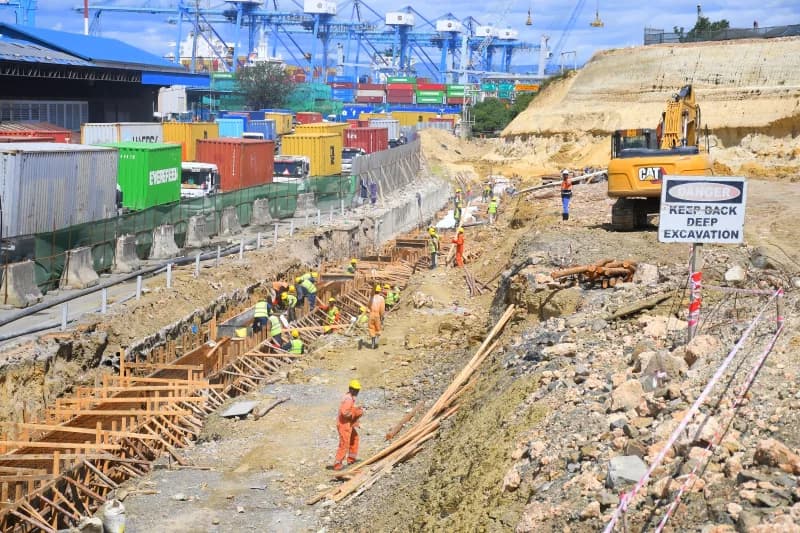
Kenya's National Infrastructure Fund represents an ambitious attempt to change how the country finances roads, energy, transport and other strategic investments. With an initial capital base of KSh340 billion (approximately $2.62 billion), the government hopes to mobilize domestic and private capital while reducing reliance on conventional public borrowing.
But as Kenya moves towards this financing model, developments in Turkey offer an important lesson about the risks associated with investment funds, asset valuations and investor confidence.
In September 2026, Turkish regulators ordered the liquidation of 131 investment funds managed by seven portfolio management companies after some funds struggled to meet investor withdrawal requests.
The episode exposed weaknesses in liquidity management and investment oversight, raising questions about how financial institutions value assets and manage investors' money.
The 131 funds held approximately $20.4 billion in assets, representing nearly 456,000 investors. Their combined portfolio value had reached approximately 1.3 trillion Turkish lira at the end of August 2026.
The funds had expanded rapidly, attracting investors seeking high returns amid persistent inflation and depreciation of the Turkish lira.
One particularly striking example was Tera Portfolio's TLY hedge fund, which reported cumulative returns exceeding 15,000% in lira terms by September 2026. Such extraordinary returns attracted considerable investor interest, with the fund reportedly drawing more than 100,000 investors.
The market impact was immediate. Turkey's benchmark BIST 100 index fell approximately 8% during the week of the intervention, while September became its worst monthly performance since 2008.
Kenya's National Infrastructure Fund is considerably smaller than the Turkish funds that were liquidated.
At approximately $2.62 billion, Kenya's proposed initial capitalization is equivalent to roughly 13% of the assets involved in Turkey's crisis. Put differently, the Turkish fund exposure was approximately 7.8 times the size of Kenya's initial infrastructure fund.
However, the comparison is about the scale of capital involved, not an equivalence in investment risk.
Kenya's fund is designed to finance commercially viable infrastructure rather than primarily investing in publicly traded equities.
According to the National Treasury's framework, the fund will operate with several investment safeguards:
- No more than 40% exposure to a single priority sector. - No more than 20% exposure to an individual project. - Separate special-purpose vehicles (SPVs) to isolate project-level liabilities. - Uncommitted funds invested in government securities.
At the proposed KSh340 billion capitalization, the 20% project exposure ceiling translates to KSh68 billion.
Kenya's National Infrastructure Fund could become an important instrument for financing economic development while reducing dependence on conventional government borrowing.
But Turkey's $20.4 billion fund crisis demonstrates that the size of an investment vehicle does not guarantee the quality of its assets or the safety of investors' capital.
The lesson from Turkey is straightforward: capital mobilization creates investment capacity, but governance, transparency and financial discipline determine whether that capital is preserved.