
Ethiopia’s GDP Rebased by 59% to $210.7 Billion: A Bigger Economy on Paper?
Ethiopia has significantly increased the measured size of its economy following a comprehensive rebasing of its Gross Domestic Product (GDP).
By Economic Analysis·
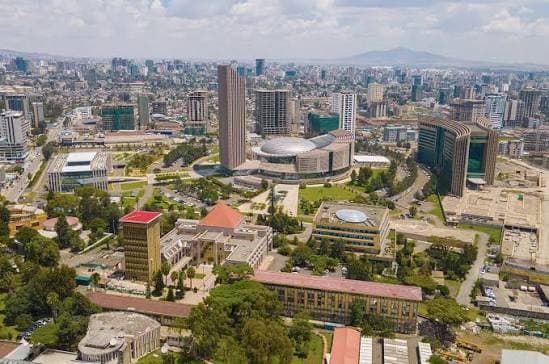
Ethiopia has significantly increased the measured size of its economy following a comprehensive rebasing of its Gross Domestic Product (GDP), raising important questions about the country's economic performance, public debt sustainability and fiscal capacity.
The revised national accounts put Ethiopia's 2024/25 nominal GDP at approximately 24.03 trillion birr, up from 15.09 trillion birr under the previous statistical framework. This represents a 59.21% increase, adding nearly 8.94 trillion birr to the measured economy.
However, the distinction is critical: Ethiopia has not suddenly produced 59% more goods and services. Its statisticians have changed how much of the country's economic activity is captured and measured.
The revision follows the adoption of 2024/25 as the new GDP base year, replacing the 2015/16 benchmark. It incorporates previously underrepresented activities, including mining, manufacturing, utilities and informal-sector businesses, alongside updated agricultural and business data.
This provides a broader picture of an economy whose structure has evolved considerably over the past decade.
The most significant implications may be fiscal and financial rather than statistical.
A larger GDP denominator can reduce the reported ratios of public debt, budget deficits and tax revenue relative to national output, even when the underlying amounts of debt and taxes collected remain unchanged.
For a country undergoing debt restructuring, this matters. Lower debt-to-GDP ratios could improve how international creditors and investors assess Ethiopia's economic capacity. However, a statistical revision does not repay external debt, increase government revenue or automatically improve foreign-exchange availability.
The real test will be whether the newly measured economic activity translates into stronger tax collection, increased industrial production, employment creation and export earnings. Ethiopia's GDP rebasing is an important statistical development. It gives policymakers and investors a potentially more complete understanding of the country's economic structure.
But the distinction between economic size and economic strength remains essential.
A larger measured economy does not automatically mean higher household incomes, improved purchasing power or a stronger capacity to service external obligations.
For Ethiopia, the next challenge is turning a bigger economy on paper into measurable improvements in productivity, government revenue and living standards.