
Tanzania Secures $1.2 Billion Financing for Strategic Railway Link to Lake Tanganyika
Tanzania has secured a $1.2 billion commercial financing facility to advance construction of the 411-kilometre electrified Standard Gauge Railway (SGR) linking Tabora to Kigoma.
By Economic Analysis·
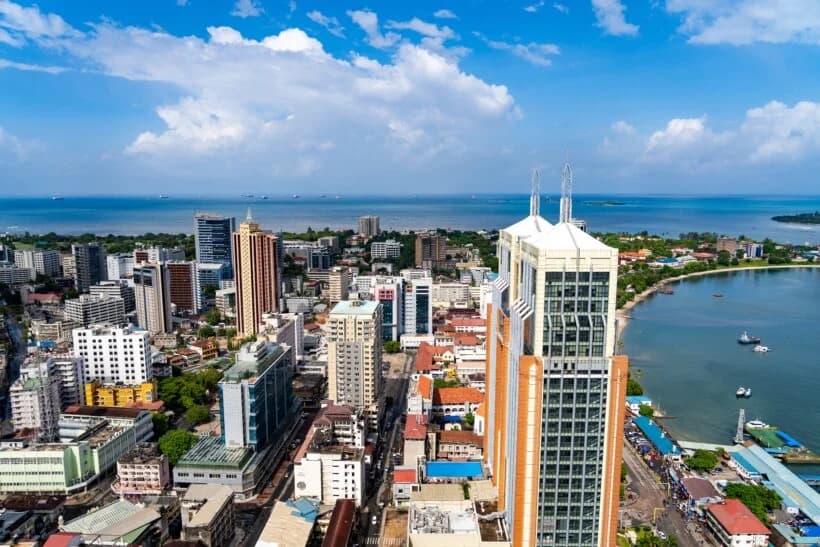
Tanzania has secured a $1.2 billion commercial financing facility to advance construction of the 411-kilometre electrified Standard Gauge Railway (SGR) linking Tabora to Kigoma, marking a significant step in the country's ambition to strengthen regional trade and establish itself as a major transport and logistics hub in East and Central Africa.
The financing, structured with the support of the African Development Bank (AfDB), represents a major example of how development finance institutions can use credit guarantees to attract commercial lenders into large-scale infrastructure projects.
At the center of the arrangement is an $800 million Partial Credit Guarantee (PCG) provided by the AfDB, its largest such guarantee to date. The guarantee is designed to reduce lenders' exposure to sovereign credit risk, making it easier for Tanzania to access substantial commercial financing.
The $1.2 billion facility was mobilized through a nine-bank syndicate, co-arranged by Deutsche Bank and Société Générale, with participation from international and regional financial institutions.
The economic significance of the railway extends beyond Tanzania's domestic transport network. By connecting Tabora to Kigoma and Lake Tanganyika, the project is expected to improve access to markets for agricultural producers, mining companies and businesses in western Tanzania.
Its strategic importance lies in its potential to connect the port of Dar es Salaam to landlocked economies in the Great Lakes region, particularly the Democratic Republic of Congo (DRC) through Kigoma and the port of Kalemie.
The wider railway development program also seeks to strengthen connectivity with Burundi and eastern DRC, positioning the Central Corridor as an increasingly important alternative for regional trade.
For businesses, improved rail connectivity could mean lower cargo transportation costs, more predictable freight movement and greater opportunities for cross-border commerce.
However, the financing also raises an important economic consideration: infrastructure investment must ultimately generate returns capable of justifying its financing costs.
The $1.2 billion facility is commercial financing, not a grant. The AfDB guarantee reduces lenders' exposure to risk, but it does not eliminate Tanzania's underlying repayment obligations.
The success of the investment will therefore depend on railway utilization, freight volumes, operational efficiency and the ability to attract sufficient agricultural and mineral cargo.
Tanzania must also ensure that railway construction is accompanied by complementary investments in logistics facilities, industrial development and cross-border trade infrastructure.
Tanzania is not simply financing a railway line. It is investing in the infrastructure of regional commerce. If successfully implemented, the Tabora–Kigoma railway could strengthen the country's position as a logistics gateway between the Indian Ocean and Central Africa.
The real measure of success, however, will not be kilometers of railway constructed or billions of dollars mobilized but the trade, productivity, investment and employment the corridor generates over time.